
Do I Need a Business License to Send Invoices?
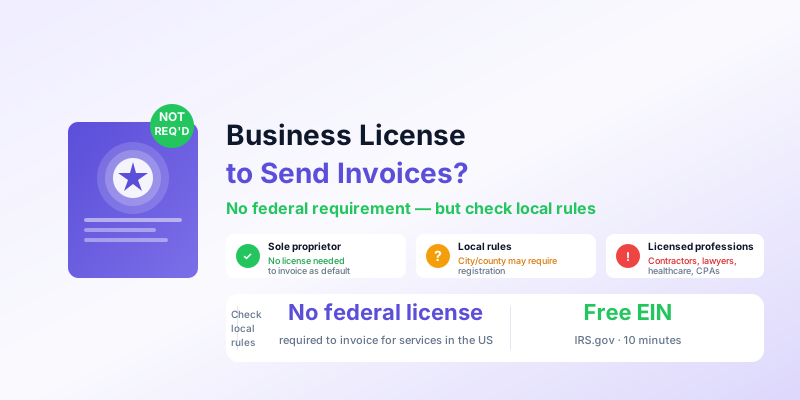
This is one of the most common questions from new freelancers and small business owners, and the short answer is: no, there is no federal requirement to have a business license in order to send invoices or receive payment for services. You can legally invoice clients and report that income without a business license in most cases.
But "in most cases" is doing some work in that sentence. Local requirements vary significantly, and certain professions and states have their own rules. This guide explains what you actually need to check.
No Federal Business License Requirement
The US federal government does not require a general business license to operate as a freelancer or independent contractor. You can:
- Invoice clients using your own name
- Receive payments as a sole proprietor
- Report income on Schedule C of your personal tax return
- Operate a service-based business indefinitely
All of this is legal without a business license, as long as you comply with applicable local rules (more on those below) and pay your taxes.
The Requirements That Do Exist
While there's no federal license requirement, several other requirements may apply depending on your situation:
Local (City/County) Business Licenses
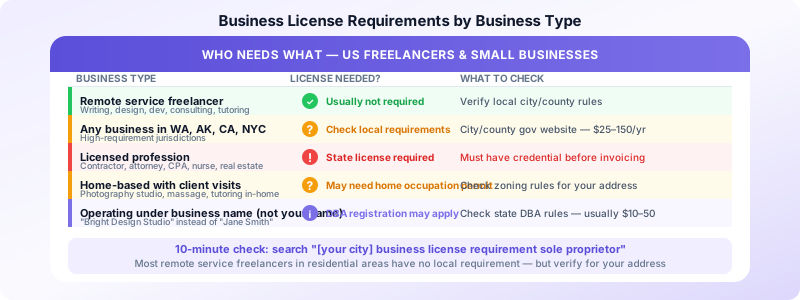
Many cities and counties require anyone operating a business within their jurisdiction to obtain a local business license — even sole proprietors working from home. This is typically a registration and tax document, not a permission to operate. The fee is usually $25–$150 per year.
States most likely to require local licenses: California, Washington, Alaska, and many high-population municipalities in other states. New York City, for example, requires most businesses to register.
How to check: Search "[your city] business license requirement sole proprietor" or visit your city/county government website. This takes 10 minutes and gives you a definitive answer.
Professional Licenses (Occupation-Specific)
Some professions require a state-issued license to practice — and therefore to invoice for services. These are not general business licenses but occupation-specific credentials:
- Licensed contractors (general contractors, electricians, plumbers)
- Healthcare providers (nurses, therapists, physicians)
- Attorneys and CPAs
- Real estate agents
- Financial advisors
- Cosmetologists and estheticians
If your work requires professional certification or licensure, you need that license before you can legally provide and invoice for those services. This is separate from a general business license.
Home Occupation Permits
If you operate a business from a residential address, some localities require a home occupation permit — especially if clients visit you at home or if your work involves any signage or equipment that might affect neighbors. For fully remote work (no client visits, no visible business activity), this typically doesn't apply.
State-Specific Business Registration
Some states require sole proprietors to register a "doing business as" (DBA) name if they operate under a name other than their own legal name. If you freelance as "Jane Smith," no registration required. If you freelance as "Bright Design Studio," you may need to register that name with your state.
What About an LLC or Other Business Structure?
If you're operating as a sole proprietor (the default for most freelancers), you're already a legal business entity — you just don't have a separate legal structure. You can invoice, contract, and receive payment under your own name.
If you form an LLC (Limited Liability Company), you register it with your state — that registration is not a "business license" but it does involve fees and ongoing compliance requirements. An LLC provides liability protection (your personal assets are shielded from business debts) but is not required to invoice clients.
Common business structure comparison:
- Sole proprietor: No registration required. Invoice under your own name. All income on your personal taxes. No liability separation.
- LLC: State registration required ($50–$500 depending on state). Can invoice under the LLC name. Income typically flows to personal taxes. Liability separation.
- S-Corp or C-Corp: More complex setup, meaningful tax benefits at higher income levels (generally $60k+ net profit). Not relevant for most early-stage freelancers.
For most new freelancers and side hustlers, sole proprietor status is fine to start. The invoice is just as valid whether you're a sole proprietor or an LLC.
Does Your Invoice Need a Business Registration Number?
In the US, sole proprietors can invoice using just their name and address — no registration number is required on a standard invoice. The fields that might appear on your invoice:
- Your name or business name (required)
- Your address (recommended)
- Your EIN or SSN — only required if the client needs it for 1099 reporting; not typically printed on invoices
- Sales tax registration number — required on the invoice only if you're collecting sales tax
A client may ask for your EIN (Employer Identification Number) for their 1099 filing. You can get an EIN for free from the IRS online at no cost and in under 10 minutes — it doesn't require an LLC or any business registration. Many sole proprietors use their SSN instead; an EIN keeps your SSN off paperwork.
What to Do Before Sending Your First Invoice
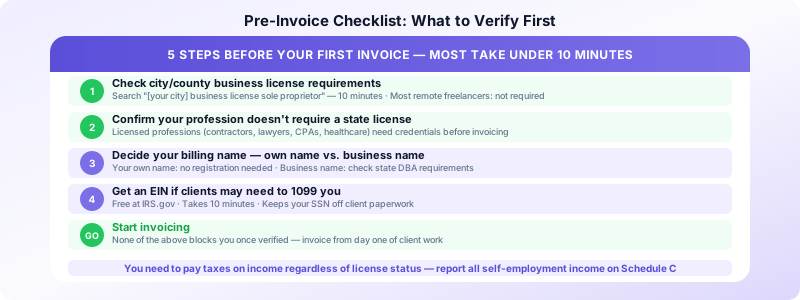
A practical checklist for new freelancers:
-
Check your city/county requirements. 10-minute search online. Most service-based sole proprietors in residential areas do not need a local license, but confirm for your specific location.
-
Check if your profession requires a state license. If you're in a licensed profession, ensure you have the required credential before invoicing for those services.
-
Decide on your business name. If using your own name, no registration needed. If using a business name, check DBA requirements in your state.
-
Get an EIN if clients may need to 1099 you. Free, takes 10 minutes at IRS.gov. Clients paying you more than $600 per year may request it.
-
Start invoicing. None of the above blocks you from sending invoices once you've verified they don't apply to your situation.
The Bottom Line
For the vast majority of service-based freelancers in the US — writers, designers, developers, consultants, photographers, coaches, tutors — there is no license required to send invoices and receive payment. You operate as a sole proprietor by default, and that's a fully legal business structure.
Check your local city/county requirements and your profession's licensing rules. For most people doing knowledge work or service work from home, neither will apply.
What you do need is to report and pay taxes on your income — self-employment tax of 15.3% plus income tax at your marginal rate. For an overview of the tax obligations side, see our guide on side hustle invoicing tips for beginners.
Once you've confirmed no license is required in your situation, start invoicing from day one. Invoices Customers lets you create professional invoices from your iPhone in under 2 minutes — no license, no subscription, no setup overhead. For help structuring that first invoice, see our guide on how to send your first invoice.
Sources:
