
Side Hustle Invoicing Tips for Beginners
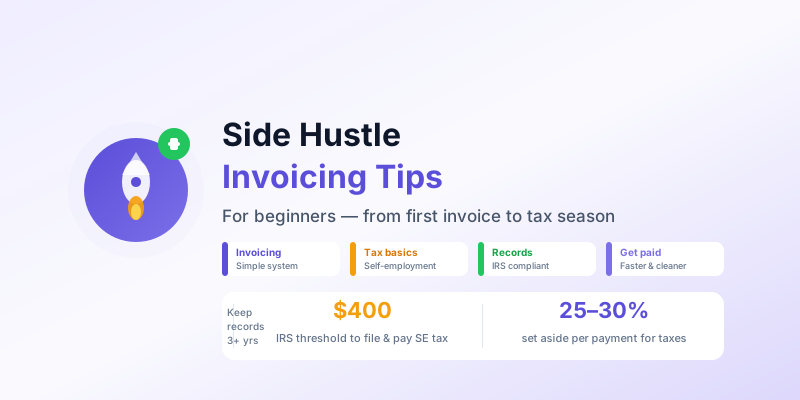
Starting a side hustle is exciting. Figuring out how to get paid professionally — and how to handle the tax side of things — is less exciting, but it doesn't have to be complicated. This guide covers everything a beginner needs to know about invoicing for side income: what to include, how to stay organized, and what the IRS expects.
You Need to Invoice Even for Small Amounts
Many side hustlers start by getting paid informally — Venmo, cash, or a quick PayPal transfer. This works for tiny amounts and occasional one-offs, but once your side hustle becomes regular, you need proper invoices.
Reasons to invoice from the start:
Professionalism. Clients who pay regular side hustlers for ongoing services take you more seriously when you send an invoice. It signals that this is a real business arrangement, not a casual favor.
Your records. When tax time comes, you need to account for all your income. Invoices give you a clear record of what you charged, when, and to whom — separate from your personal bank activity.
Dispute protection. If a client later disputes what they owe or what you agreed to deliver, an invoice with a service description and amount is your documentation.
The IRS threshold. If you earn more than $400 from self-employment income in a calendar year, you're required to report it on your tax return. Proper invoices make this reporting accurate and defensible.
What Goes on a Side Hustle Invoice
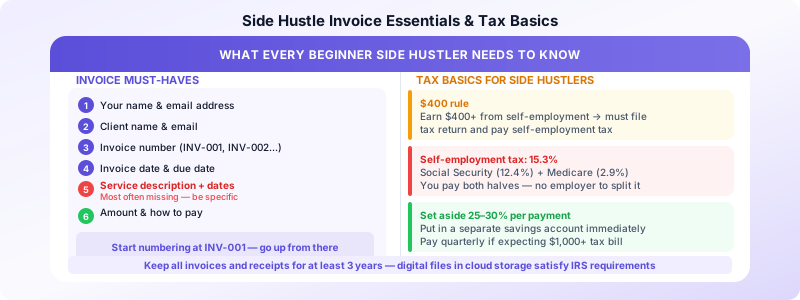
Your invoice doesn't need to be elaborate. At minimum, include:
- Your name (or business name if you've created one)
- Your email address
- The client's name and email
- Invoice number (start with INV-001 and go from there)
- Invoice date
- Due date
- Description of work performed
- Amount charged
- How to pay
That's a complete invoice. For most side hustlers doing services — tutoring, design, writing, pet care, photography — this covers everything needed.
Separate Your Side Hustle Finances
This is the most important financial habit to build early. Open a separate bank account for your side hustle income — even a basic free checking account works. Route all client payments to that account.
Why it matters:
Tax accuracy. When tax season arrives, you can pull your side hustle income from one place rather than parsing personal transactions for business deposits.
Expense tracking. Business expenses you pay from the same account are easy to identify and deduct.
Professionalism. Asking clients to pay into an account in your name (or your business name) rather than a Venmo tied to your personal profile looks more professional.
You don't need a formal business bank account to start — a personal checking account used exclusively for side hustle income works fine until your volume justifies a business account.
Tax Basics Every Side Hustler Needs to Know
Side hustle income is self-employment income. That means two things that differ from a regular paycheck:
Self-employment tax: You owe 15.3% of net earnings (Social Security at 12.4% + Medicare at 2.9%). As an employee, your employer pays half — as a side hustler, you pay the full amount.
No withholding: Nobody withholds taxes from your side hustle payments. You're responsible for setting aside money and paying taxes yourself.
The $400 rule: If your net self-employment earnings exceed $400 in a year, you're required to file a tax return and pay self-employment tax — regardless of whether you receive a 1099 form.
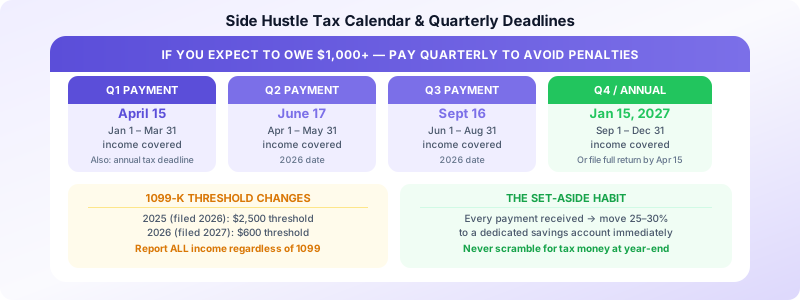
1099-K threshold changes: In 2025 (taxes filed in 2026), the Form 1099-K reporting threshold drops to $2,500. Starting in 2026, it's scheduled to fall to $600. This means payment platforms (PayPal, Venmo, Stripe) will send 1099-Ks to many more side hustlers than before. Whether or not you receive a 1099, you're required to report all income.
Quarterly estimated taxes: If you expect to owe more than $1,000 in taxes for the year from your side hustle, the IRS requires quarterly estimated tax payments (due April, June, September, January). Failing to pay quarterly results in a penalty at year-end.
A common rule of thumb: set aside 25–30% of every side hustle payment for taxes.
Keep Every Invoice and Receipt
The IRS requires you to keep business records for at least 3 years (4 years for employment-related records). For a side hustler, that means:
- Every invoice you issue
- Bank statements showing payments received
- Receipts for any business expenses you're deducting
Digital records are fine — a folder in Google Drive or iCloud works perfectly. The key is consistency: file each invoice and receipt as it occurs, not in a pile at year-end.
For a complete filing system, see our guide on how to organize invoices and receipts.
Common Side Hustle Invoicing Mistakes
Not invoicing at all. Verbal agreements and informal payments create zero paper trail. When you need to reconcile income or respond to an IRS question, you'll have nothing to show.
Using personal PayPal/Venmo without records. These platforms will send you a 1099-K if you exceed the threshold. If your records don't match what they report, you have a problem.
Forgetting to track expenses. Side hustle expenses are deductible: equipment, software subscriptions, supplies, a home office if you use a dedicated space. If you don't track them, you're paying taxes on income you could legally reduce.
Sending invoices late. Invoice as soon as work is complete. Late invoicing delays payment and makes the client feel that billing isn't a priority.
Not following up on unpaid invoices. Side hustlers often hesitate to follow up because the client relationship feels informal. But you've done the work — follow up within 2 days of a missed due date, professionally and without apology.
Setting Payment Terms
For side hustle work, short payment terms are appropriate:
- Due on receipt or Net 7 — for small, one-time projects
- Net 14 — for larger projects or ongoing work
- Milestone payments — for big projects: 50% upfront, 50% on delivery
Avoid Net 30 unless a client specifically requires it. Shorter terms mean faster cash and fewer late payment situations.
Write the due date explicitly on every invoice: "Payment due April 26, 2026" — not just "Net 7." This removes ambiguity and sets a clear expectation.
Starting With the Right Tools
You don't need expensive accounting software to invoice as a side hustler. You need:
- A way to create and send professional invoice PDFs
- A record of invoice status (sent / paid / overdue)
- A folder to archive invoices for tax purposes
Invoices Customers handles all three from your iPhone — create professional invoices in under 2 minutes, track payment status, and keep your client data organized — without a subscription fee. It's built for exactly the scale of a side hustle: a handful of clients, regular billing, no enterprise overhead.
For your first few clients, start simple. Get the habit of invoicing immediately after delivering work, tracking what's paid, and filing everything in one folder. Those habits, built early, cost nothing to maintain and prevent the headaches that come from ad-hoc record-keeping.
For guidance on the next step — structuring your billing as your side hustle grows — see our guide on how to send your first invoice.
Sources:
