
Invoice Payment Terms Explained: Net 30, Net 15
You finished the project, sent the invoice, and now you're waiting. And waiting. Three weeks later, your client finally asks: "When was this due again?" That scenario plays out every day for freelancers and small business owners who skip one critical detail — clear invoice payment terms.
Setting the right payment terms isn't just about putting "Net 30" on a document. It's about controlling when money hits your account, reducing awkward follow-up conversations, and protecting your cash flow. In this guide, you'll learn exactly which invoice payment terms to use, when to use them, and how to enforce them.
What Are Invoice Payment Terms?
Invoice payment terms are the conditions you set for when and how a client should pay you. They appear on every invoice you send and define the payment due date, accepted payment methods, and any penalties or discounts that apply.
Think of payment terms as a contract between you and your client. They answer three questions:
- When is the payment due?
- How should the client pay?
- What happens if they pay late (or early)?
Without clear terms, clients default to their own timeline — which is usually "whenever they get around to it." Research shows that businesses with clearly stated payment terms get paid an average of 14 days faster than those without.
Common Payment Terms Explained
Here are the most widely used invoice payment terms and when each one makes sense for your business.
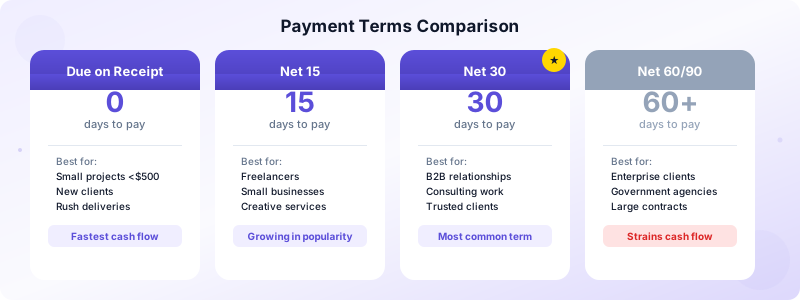
Due on Receipt (DOR) means payment is expected immediately when the client receives your invoice. Use this for small projects under $500, first-time clients you haven't built trust with yet, or rush jobs where you delivered on a tight deadline.
Net 15 means full payment is due within 15 calendar days of the invoice date. This term is gaining popularity among freelancers and small businesses who need faster cash flow. If you invoice on March 1, payment is due by March 16.
Net 30 is the most common payment term in business. Full payment is due within 30 calendar days. It gives clients enough breathing room to process your invoice through their accounting systems while keeping your cash flow reasonably predictable. Net 30 payment terms work best for established client relationships where you trust the client to pay on time.
Net 60 and Net 90 extend the payment window to 60 or 90 days. These terms are common when working with large corporations or government agencies that have longer procurement cycles. Be cautious — these terms strain your cash flow significantly. Only accept them if you have a financial cushion or if the contract size justifies the wait.
How to Choose the Right Payment Terms for Your Business
The best payment terms balance your cash flow needs with your client's expectations. Here's how to decide.
Consider your expenses. If you rely on invoice payments to cover monthly bills like rent, software subscriptions, or subcontractors, shorter terms (Net 15 or Due on Receipt) keep cash flowing. If you have a 3-month financial buffer, Net 30 gives you flexibility without risk.
Factor in client size. Larger companies often have rigid payment cycles. A Fortune 500 company may insist on Net 60 because their accounts payable department processes payments in batches. A local business or fellow freelancer can usually pay within 15 days.
Know your industry norms. Construction typically uses progress billing with Net 30. Creative freelancers often use Net 14. SaaS and consulting default to Net 30. Matching industry standards prevents awkward negotiations.
Adjust for risk. New clients get shorter terms (Net 15 or deposits). After 3-5 successful payments, you can extend to Net 30. If a client has a history of paying late, tighten terms or require upfront deposits.
When creating professional invoices, always include your payment terms prominently — ideally near the total amount where the client's eye naturally goes.
Early Payment Discounts and Late Fees
Smart payment terms include both carrots and sticks. Early payment discounts reward clients who pay quickly. Late fees discourage delays.
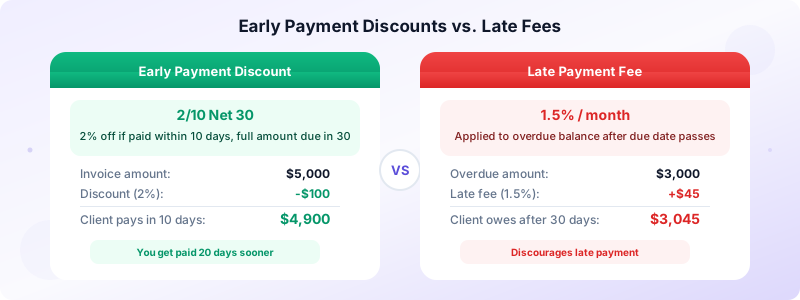
Early payment discounts follow a standard format: "2/10 Net 30" means the client gets a 2% discount if they pay within 10 days. Otherwise, the full amount is due in 30 days. On a $5,000 invoice, that's a $100 savings for the client — and you get your money 20 days sooner.
Common discount structures:
- 2/10 Net 30 — 2% off if paid within 10 days
- 1/15 Net 30 — 1% off if paid within 15 days
- 5% deposit discount — 5% off for paying a deposit upfront
Late payment fees protect you when clients miss deadlines. The standard late fee ranges from 1% to 2% per month on the overdue balance. On a $3,000 invoice that's 30 days overdue, a 1.5% monthly late fee adds $45.
To enforce late fees effectively:
- State the fee clearly on every invoice
- Mention it in your contract before starting work
- Apply it consistently — making exceptions trains clients to pay late
- Send an automatic reminder the day an invoice becomes overdue
Check your local laws before setting late fees. Some jurisdictions cap the maximum interest rate you can charge on overdue invoices.
How to Write Payment Terms on Your Invoices
Your payment terms should be impossible to miss. Here's exactly where and how to display them on every invoice you send.
Position them prominently. Place your payment due date near the total amount due — these are the two most important pieces of information on any invoice. Don't bury terms in fine print at the bottom. Studies show that invoices with prominently displayed due dates are paid 8 days faster on average.
Be specific, not vague. Write "Payment due by April 20, 2026" instead of just "Net 30." Clients process specific dates faster than they calculate calendar days from an invoice date. A specific date creates a concrete deadline that sticks in the client's mind.
Include all the details. A complete payment terms section covers:
- Due date (specific calendar date)
- Accepted payment methods (bank transfer, credit card, check)
- Late fee policy (percentage and when it kicks in)
- Early payment discount (if you offer one)
- Currency (especially for international clients)
Keep the language simple. Skip legal jargon. "Please pay by April 20, 2026. A 1.5% monthly fee applies to overdue balances" is clearer than "Payment shall be rendered within net thirty (30) days of the invoice date, failing which interest shall accrue at the rate of 1.5% per calendar month."
Agree on terms before starting work. The best time to discuss invoice payment terms is during the proposal or contract phase — not after you've delivered. When terms are agreed upon upfront, clients expect the payment request and process it faster. Include your standard terms in your service agreement or project proposal so there are no surprises when the invoice arrives.
Get Paid Faster with Clear Payment Terms
Clear invoice payment terms are one of the simplest ways to improve your cash flow. They set expectations from the start, reduce payment disputes, and give you a professional framework for following up on overdue amounts. Businesses that standardize their payment terms report up to 30% fewer late payments compared to those that negotiate terms on a case-by-case basis.
Here's a quick-start checklist:
- Choose terms that match your cash flow needs (Net 15 for most freelancers)
- State terms clearly on every invoice — near the total amount
- Offer a small early payment discount to speed up collections
- Apply late fees consistently and mention them upfront
- Follow up 3 days before and on the payment due date
With Invoices Customers, you can set your payment terms once and apply them to every invoice automatically. Track which invoices are outstanding, overdue, or paid — right from your iPhone, no internet required.
Download Invoices Customers and take control of your invoice payment terms today.
