
Small Business Accounting: The Essential Guide for 2026
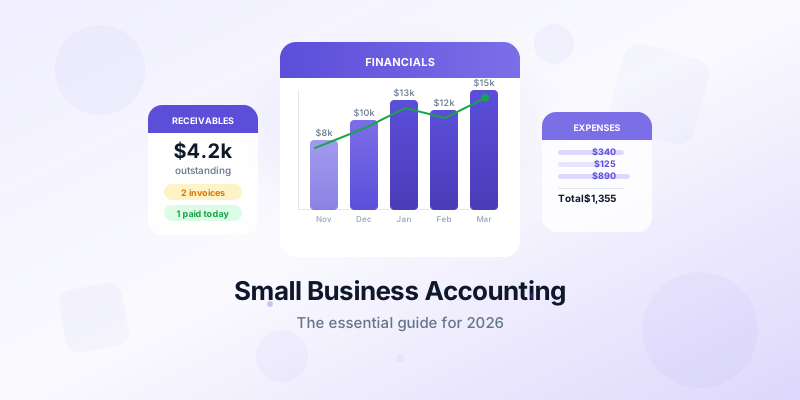
Small business accounting doesn't require a finance degree, but ignoring it does serious damage. A QuickBooks survey found that small business owners with low financial literacy lose an average of $118,121 in profit. The basics take a weekend to learn and pay dividends every month.
This guide covers the accounting concepts every entrepreneur needs to understand, the systems that keep your books clean, and how invoicing connects to your overall financial health.
Separate Your Business and Personal Finances First
Before tracking anything, open a dedicated business bank account. This is the single most important accounting step for any new business.
Mixing personal and business money creates three problems. First, your records become unreliable — you can't tell what's a business expense without reviewing every transaction individually. Second, you lose tax deductions because you can't separate eligible business expenses from personal spending. Third, if your business is an LLC or corporation, commingling funds can expose your personal assets to business liability.
Open a business checking account and a business credit card. Run all business income and expenses through those accounts exclusively. Your accounting becomes dramatically simpler from day one.
The Accounting Basics You Need to Know
You don't need to master accounting textbooks, but understanding these core terms gives you a foundation for every financial decision.
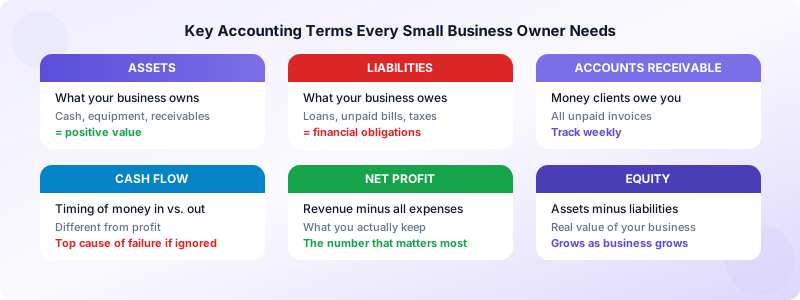
Cash vs. accrual accounting: Cash-basis accounting records income when money is received and expenses when paid. Accrual accounting records income when it's earned (even if unpaid) and expenses when they're incurred. Most small businesses start with cash-basis because it's simpler, but accrual gives a more accurate picture of profitability.
Accounts receivable: Money clients owe you for completed work. Every unpaid invoice is accounts receivable. Keeping this current is critical — aging receivables are one of the top reasons small businesses face cash flow problems.
Accounts payable: Money you owe to suppliers, vendors, or contractors. Staying on top of this prevents late fees and damaged relationships.
Assets and liabilities: Assets are what your business owns (cash, equipment, receivables). Liabilities are what you owe (loans, unpaid bills). The difference between them is your equity — the real value of your business.
Gross profit vs. net profit: Gross profit is revenue minus direct costs (materials, labor). Net profit is what remains after all expenses, including overhead and taxes. Most small businesses focus on revenue and miss how thin their net margin actually is.
Track Every Expense — Every Time
Expense tracking is where most small business accounting breaks down. It feels tedious when individual transactions are small, but those small amounts accumulate into thousands of dollars in missed deductions every year.
Categories to track consistently:
- Office supplies and equipment — computers, phones, software subscriptions
- Home office — if you work from home, a portion of rent and utilities may be deductible
- Professional services — accountants, lawyers, contractors
- Marketing and advertising — website hosting, ads, business cards
- Travel and meals — business trips, client lunches (check current deduction rules)
- Vehicle use — mileage for business purposes
Keep receipts and record the business purpose at the time of the expense. Trying to reconstruct six months of expenses at tax time is painful and error-prone.
A simple system: take a photo of every receipt immediately and upload it to your accounting software. This takes 10 seconds and saves hours every quarter.
Invoicing and Accounts Receivable: The Revenue Side
Your invoicing system directly feeds your accounts receivable. Every invoice you send is money owed to your business — and untracked invoices are money left on the table.
Key practices for clean receivables:
Send invoices immediately. For every project completed, invoice the same day. Delays in sending invoices directly cause delays in payment.
Track status for every invoice. Know which invoices are outstanding, overdue, or paid. A simple status system — sent, viewed, paid, overdue — lets you see your revenue position at a glance.
Follow up systematically. Most late payments are administrative oversights, not disputes. A polite follow-up email on day one after the due date resolves the majority of overdue invoices within a week.
Invoices Customers tracks invoice status automatically — you can see your total outstanding balance and which clients are past due without building a spreadsheet. Since all data stays on your device, there's no subscription required.
For a complete invoicing workflow, see the small business invoicing guide.
Cash Flow: The Metric That Actually Keeps You in Business
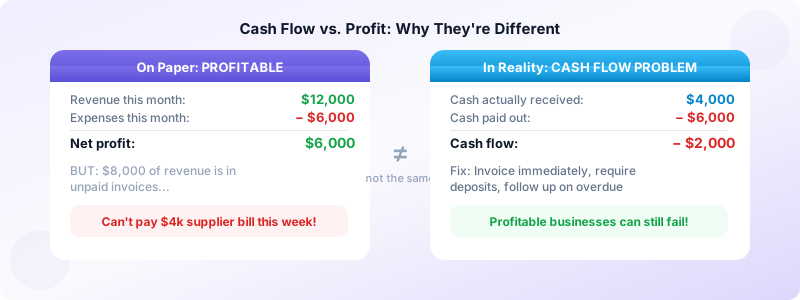
Profitability and cash flow are different things — and most small business failures are cash flow failures, not profitability failures. A business can be profitable on paper while running out of money to pay its bills.
Cash flow is the timing of money in versus money out. You can have $50,000 in outstanding invoices (profit on paper) and still be unable to make payroll if none of those invoices are paid yet.
Three practices that improve cash flow:
Invoice immediately and follow up on due dates. Every day an invoice is unpaid is a day that cash is sitting in your client's account instead of yours.
Negotiate payment terms with suppliers. If you can pay suppliers in 30 days but collect from clients in 15, your cash flow improves significantly.
Require deposits on large projects. A 30-50% upfront deposit on projects over $1,000 protects your cash position and filters out clients who aren't serious.
For a deeper dive on cash flow management, see our guide on freelancer cash flow tips.
Staying Tax-Ready All Year
Tax preparation shouldn't happen once a year — it should be a continuous process that makes filing simple.
Track quarterly estimated taxes. If you're self-employed or run a small business, you likely owe quarterly estimated taxes (January, April, June, and September deadlines in the US). Missing these triggers penalties.
Keep organized records by category. Use folders (physical or digital) organized by year and category. When your accountant or tax software asks for your home office expenses or vehicle mileage, you should be able to pull that number in minutes, not days.
Reconcile monthly. Match your bank statements to your accounting records every month. Discrepancies are much easier to investigate when they're a few weeks old versus a year old.
Know what you can deduct. Business expenses that reduce taxable income include software subscriptions, professional development, business insurance, and home office costs. Tracking these year-round is worth significantly more than scrambling to find receipts in April.
When to Get Professional Help
You can handle the basics yourself — category tracking, invoicing, bank reconciliation. But certain situations call for a professional accountant.
When to hire help:
- Your first year in business (to set up your chart of accounts correctly)
- When you hire your first employee (payroll taxes are complex)
- Any year your income changes significantly
- Business structure changes (sole proprietor to LLC, LLC to S-Corp)
- You receive an IRS notice or audit request
The cost of an accountant for an annual review is typically $500-$2,000 for a small business — well worth it to catch mistakes, maximize deductions, and avoid penalties.
Build Your System, Then Keep It Simple
The best small business accounting system is the one you'll actually use. Start with the basics: separate accounts, expense tracking, timely invoicing, and monthly reconciliation.
These four habits prevent 90% of the accounting problems that derail small businesses. Add a simple invoicing app and accounting software as your business grows, and you'll have clean books without spending hours every week.
Download Invoices Customers to handle the invoicing side of your small business accounting — create professional invoices, track payment status, and keep your receivables organized, all from your phone.
