
Invoicing: The Complete Guide for Small Business
You finished the work. Now you need to get paid. That gap between delivering a service and receiving payment is where invoicing lives, and how well you handle it determines whether your business thrives or constantly chases money. Whether you are a freelancer billing your first client or a contractor managing dozens of projects, a solid invoicing process is the foundation of healthy cash flow.
This guide covers everything you need to know about invoicing, from building a professional invoice to getting paid on time and keeping your records clean.
What Is Invoicing and Why Does It Matter?
Invoicing is the process of creating and sending a formal document that requests payment for goods or services. It sounds simple, but it is one of the most critical business functions you will manage.
A strong invoicing system does three things. First, it gets you paid predictably. Clients who receive clear, professional invoices pay faster than those who get vague emails asking for money. Second, it creates a paper trail. Every invoice is a legal record of what you delivered, what you charged, and when payment was due. Third, it simplifies tax time. Organized invoices make it straightforward to report income and respond to audits.
Poor invoicing leads to late payments, cash flow gaps, and hours wasted on follow-ups. A missing invoice number or unclear line item can delay payment by weeks. The good news is that with the right approach and tools, you can build a system that runs smoothly.
What Every Professional Invoice Needs
A professional invoice needs to be clear, complete, and easy to act on. Missing even one key element can give a client a reason to delay payment.
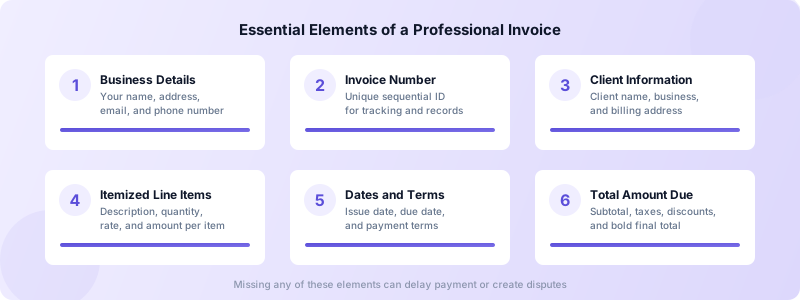
Your business details. Add your full business name, address, email, and phone number at the top so clients can reach you with questions.
A unique invoice number. Use a consistent invoice numbering system so you can find any transaction in seconds. Sequential numbers like INV-001, INV-002 work well. Never duplicate or skip numbers.
Client information. Include the client's legal business name, billing address, and contact person. Many companies route invoices through accounts payable departments, so getting this right keeps your invoice from sitting in limbo.
Issue date and due date. Pairing these with clear payment terms like Net 15 or Net 30 eliminates ambiguity about when you expect payment.
Itemized line items. List every product or service separately with a description, quantity, unit price, and line total. Specific descriptions like "Website homepage redesign, 12 hours at $150/hour" leave nothing to interpretation.
Total amount due. Show the subtotal, any applicable taxes or discounts, and a clear final total. Make the total visually prominent so the client sees it immediately.
For a deeper breakdown, read the complete guide on what to include on an invoice.
How to Build an Invoicing Process That Works
Creating a single invoice is easy. Building a repeatable process that scales with your business is the real challenge.
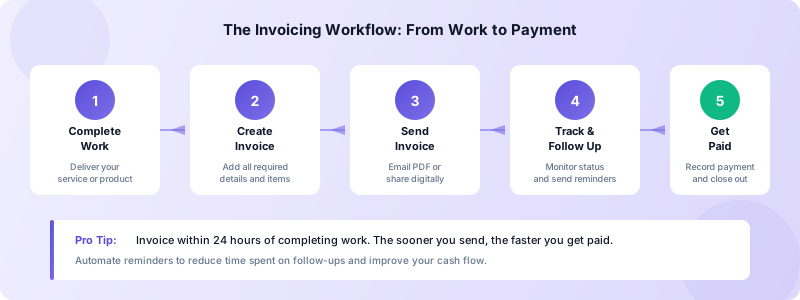
Invoice immediately after completing work. Every day you delay is a day you do not get paid. Aim to send your invoice within 24 hours of delivering work while the project is still fresh in your client's mind.
Set payment terms before you start. Your client should know your payment terms, accepted payment methods, and late fee policy before you send the first invoice. If you are unsure what terms to use, start with Net 30 payment terms and adjust based on your industry.
Use a consistent template. Every invoice you send should look the same. Consistent formatting builds trust, reinforces your brand, and makes it easier for clients to process your invoices.
Track every invoice status. Know which invoices are outstanding, overdue, or paid at all times. Without status tracking, invoices slip through the cracks and you leave money on the table.
Follow up systematically. Send a polite reminder before the due date. If payment is late, follow up on day one, then again at one and two weeks overdue. A follow-up system for unpaid invoices removes the awkwardness and keeps things professional.
Getting Paid Faster and Avoiding Mistakes
Sending an invoice is only half the battle. These strategies reduce payment delays and help you avoid the most common pitfalls.
Use shorter payment terms. Net 30 is standard, but Net 14 or Due Upon Receipt can dramatically improve your cash flow. If a client pushes back, meet in the middle with Net 21.
Offer early payment incentives. A 2% discount for payment within 10 days motivates clients to prioritize your invoice. You lose a tiny percentage but gain faster, more predictable cash flow.
Accept multiple payment methods. Bank transfers, credit cards, and online payments all reduce friction. The fewer barriers between your client and paying you, the sooner you see the money.
Charge late fees. A late fee policy of 1.5% per month on overdue balances discourages procrastination. State it clearly on every invoice. Learn more about late payment fees on invoices.
Avoid vague descriptions. Line items like "services rendered" invite confusion. Always describe exactly what you delivered, the quantity, and the rate. Specificity protects both you and your client.
Send invoices to the right person. Large companies have accounts payable departments. If you send the invoice to your project contact instead of billing, it may sit unread for weeks. Always confirm the correct billing email.
Never skip follow-ups. Many business owners feel awkward chasing payments, so they wait and hope. A systematic process turns late invoices into paid invoices without damaging relationships. For more pitfalls, read the full list of common invoicing mistakes.
Simplify Your Invoicing With the Right Tool
Building an invoicing process does not have to be time-consuming. Invoices Customers lets you create professional invoices in seconds on your iPhone. Add client details, line items with quantities and pricing, and your payment terms. The app generates a polished PDF you can send or print directly, and tracks whether each invoice is outstanding, overdue, or paid.
Your client information is stored so you never re-enter names or tax details. Need an estimate first? Create one and convert it to an invoice with a single tap. Your data stays on your device, no account needed, and everything works offline.
Download Invoices Customers free on the App Store and start getting paid faster today.
Invoicing is not just about asking for money. It is a core business skill that directly affects your cash flow, client relationships, and financial records. Treat it as a system rather than a chore, and your business runs on predictable, reliable income.
