
Late Payment Fees on Invoices: A Complete Guide
Late payment fees on invoices are one of the most effective tools you have to protect your cash flow. When clients know there's a financial consequence for paying late, they prioritize your invoice. Yet many freelancers and small business owners skip this step entirely — either because they don't know how to structure the fee or they're afraid of upsetting clients.
This guide walks you through exactly how to add late fees to your invoices, what's legally required, and how to enforce them without damaging client relationships.
Why Late Payment Fees Matter for Your Business
Late payments aren't just annoying — they're expensive. When a client pays 30 days late on a $5,000 invoice, you lose the use of that money for an entire month. Multiply that across several clients and your cash flow becomes unpredictable.
Adding a late fee clause does two things. First, it creates urgency. Clients who might otherwise let your invoice sit in a pile suddenly have a reason to pay on time. Second, it compensates you for the real cost of waiting. You have bills, taxes, and operating expenses that don't pause because a client is slow to pay.
Research from accounting firms consistently shows that invoices with clearly stated late fee policies get paid 15-20% faster than those without. The fee itself is rarely the point — the signal it sends is what matters.

How to Add Late Payment Fees to Your Invoices
Adding a late fee starts with your payment terms. You need three components: the fee type, the amount, and the trigger date.
Choose Your Fee Structure
You have two main options:
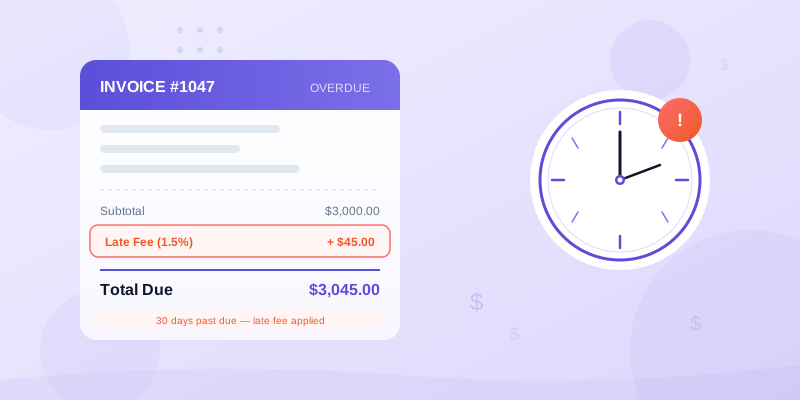
Percentage-based fees charge a percentage of the outstanding balance for each period the invoice remains unpaid. The most common rate is 1.5% per month (18% annually). For a $3,000 invoice that's 30 days late, that's a $45 fee.
Flat fees charge a fixed dollar amount regardless of the invoice total. For example, a $25 or $50 flat fee for any invoice past due. This works well when your invoices are relatively consistent in size.
Write Clear Late Fee Language
Your late fee clause should be specific and unambiguous. Here are two examples you can adapt:
"A late fee of 1.5% per month will be applied to all invoices not paid within 30 days of the invoice date."
"Invoices unpaid after the due date are subject to a $50 late fee plus 1% monthly interest on the outstanding balance."
Place this language prominently on every invoice — not buried in fine print. The best location is directly below or next to your payment terms. When clients see the fee before the due date arrives, they're far more likely to pay on time.
Set It Up in Your Invoicing Tool
With Invoices Customers, you can add your late fee terms directly to each invoice. Include the late fee wording in your notes or terms section so it appears on every PDF you generate. This way, the policy is documented every time you send an invoice from your phone.
Legal Considerations for Late Payment Fees
Before you add a late fee, you need to understand the legal boundaries. Laws vary by state and country, and charging an unreasonable fee can expose you to legal issues.
Know Your Local Limits
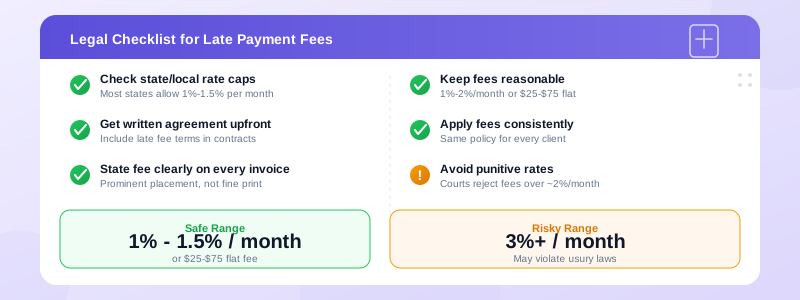
In the United States, most states allow late payment fees on commercial invoices, but many cap the maximum interest rate. Common caps range from 1% to 1.5% per month. Some states, like California and New York, have specific usury laws that limit the total interest you can charge.
For business-to-business transactions, the rules are generally more flexible than consumer transactions. However, you should still verify your state's regulations. A quick check with your state's commerce department or a brief consultation with an accountant can save you headaches later.
Get Agreement in Advance
The strongest legal protection comes from getting written agreement before work begins. Include your late fee policy in your contract, proposal, or engagement letter. When a client signs off on your terms upfront, enforcing the fee later is straightforward.
If you don't have a formal contract, the next best option is to state the late fee policy on every invoice and estimate you send. Consistent communication creates an implied agreement, especially when the client has paid previous invoices that included the same terms.
Keep Fees Reasonable
Courts generally frown on fees that look punitive rather than compensatory. A 1.5% monthly fee is widely accepted. A 10% monthly fee will raise legal red flags. Stick to industry norms — 1% to 2% per month for percentage-based fees, or $25 to $75 for flat fees on typical small business invoices.
Best Practices for Enforcing Late Fees
Having a late fee policy is only useful if you enforce it consistently. Here's how to do it without alienating your clients.
Communicate Early and Often
Don't surprise clients with a fee they didn't know about. Mention your late fee policy at three key points: in your contract or proposal, on the invoice itself, and in your payment reminder emails. When you follow up on an overdue invoice, reference the specific fee that will apply if payment isn't received by a certain date.
Be Consistent
Apply the same policy to every client. If you waive the fee for one client but enforce it for another, you undermine the policy's credibility — and create potential legal issues. Consistency also makes the conversation easier. You're not singling anyone out; you're following your standard business policy.
Offer a Grace Period
A short grace period — 5 to 7 days past the due date — shows good faith and accounts for mail delays or processing times. After the grace period ends, apply the fee automatically. This approach keeps the relationship professional while still protecting your cash flow.
Use Escalation Strategically
Start with a friendly reminder before the due date. Follow up with a firmer notice once the grace period expires. If the invoice remains unpaid after 30 days, apply the late fee and send an updated invoice showing the new balance. For persistent late payers, consider requiring deposits or upfront payment for future work.
Track which clients consistently pay late using Invoices Customers' status tracking feature. When you can see at a glance which invoices are outstanding or overdue, you can act quickly rather than discovering the problem weeks later.
How Much Should You Charge?
The right amount depends on your industry, invoice size, and client relationships. Here's a practical framework:
Small invoices (under $500): A flat fee of $25-$50 works better than a percentage. A 1.5% fee on a $200 invoice is only $3 — not enough to motivate faster payment.
Medium invoices ($500-$5,000): A percentage-based fee of 1.5% per month is the industry standard. On a $2,000 invoice, that's $30 per month — meaningful but not harsh.
Large invoices ($5,000+): Stick with the percentage model. On a $10,000 invoice, 1.5% per month equals $150 — a strong incentive for the client to pay on time.
Some businesses combine both: a flat administrative fee plus monthly interest. For example, a $25 processing fee plus 1% monthly interest gives you compensation from day one while the interest accumulates on longer delays.
Start Protecting Your Cash Flow Today
Late payment fees on invoices protect your business, compensate you for delayed payments, and signal to clients that you run a professional operation. The key is to set clear terms, stay within legal limits, and enforce your policy consistently.
Start by adding a late fee clause to your next invoice. With Invoices Customers, you can build this language into every invoice you create, track payment statuses, and follow up on overdue accounts — all from your iPhone. Download it free from the App Store and take control of your payment terms today.
