
How to Write Payment Terms on an Invoice
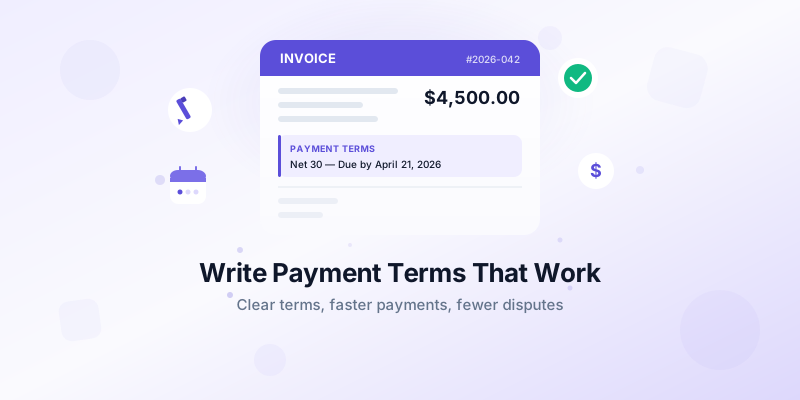
Getting paid starts with one thing: telling your client exactly when and how to pay you. Knowing how to write payment terms on an invoice removes confusion, sets expectations, and shortens the gap between sending an invoice and receiving payment. Yet many freelancers and small business owners either skip payment terms entirely or bury them in vague language that clients ignore.
This guide walks you through writing payment terms that are clear, professional, and effective — so you spend less time chasing payments and more time doing the work you love.
What Are Payment Terms and Why Do They Matter?
Payment terms are the conditions you set for how and when a client pays your invoice. They typically include the due date, accepted payment methods, late fee policies, and any early payment discounts.
Clear payment terms protect both you and your client. They eliminate the guesswork that leads to delayed payments. When a client opens your invoice and immediately understands what they owe, when it's due, and what happens if they pay late, they're far more likely to pay on time.
Vague or missing terms are one of the top reasons invoices go unpaid. If your invoice just says "please pay soon," your client has no deadline — and no deadline means no urgency. For a deeper look at standard formats like Net 30 and Net 15, check out our guide on invoice payment terms.

Essential Elements of Strong Payment Terms
Every invoice you send should include these five payment term components. Missing even one creates an opening for delays.
Due Date
State the exact calendar date, not just "Net 30." Write "Payment due by April 21, 2026" instead of "Due in 30 days." A specific date removes any ambiguity about when the clock started ticking.
Accepted Payment Methods
List every way a client can pay you — bank transfer, credit card, PayPal, check, or other methods. The more options you offer, the fewer excuses a client has for delaying. Include account details or payment links directly on the invoice.
Late Fee Policy
Specify what happens when payment is overdue. A common structure is 1.5% per month on the outstanding balance, applied after a 5-day grace period. State this clearly: "A late fee of 1.5% per month applies to balances unpaid after May 1, 2026."
Early Payment Discount
Reward clients who pay fast. "2/10 Net 30" means the client gets a 2% discount if they pay within 10 days; otherwise, the full amount is due in 30 days. This small incentive can dramatically speed up your cash flow.
Currency and Taxes
Always specify the currency (USD, EUR, GBP) and whether your prices include or exclude tax. International clients especially need this clarity. A line like "All amounts in USD. Tax not included." prevents disputes down the road.
Payment Term Formats You Can Copy
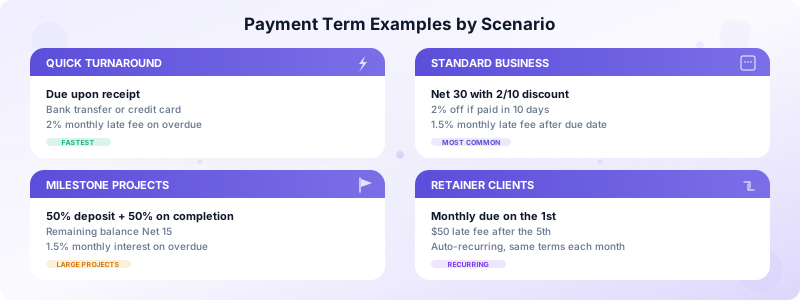
Here are ready-to-use payment term examples you can add to your invoices today. Pick the one that fits your business and customize the details.
For quick-turnaround projects: "Payment due upon receipt. Accepted methods: bank transfer, credit card. A late fee of 2% per month applies to overdue balances."
For standard business clients: "Net 30 — Payment due by [date]. A 2% discount applies if paid within 10 days. Late payments incur a 1.5% monthly fee after the due date."
For large projects with milestones: "50% deposit due before work begins. Remaining 50% due within 15 days of project completion. Late payments subject to 1.5% monthly interest."
For retainer clients: "Monthly retainer of $[amount] due on the 1st of each month. Payments received after the 5th incur a $50 late fee."
These formats work for any industry. The key is consistency — use the same terms on every invoice so clients know exactly what to expect. Invoices Customers makes this easy by letting you save your preferred terms and apply them to every invoice automatically.
Where to Place Payment Terms on Your Invoice
Placement matters almost as much as wording. If your payment terms are buried in tiny text at the bottom of page two, clients will miss them.
Near the total amount. Place your due date and payment terms directly below or beside the invoice total. This is where the client's eye naturally goes — right next to the number they need to pay.
In a highlighted section. Use a slightly different background color, a bordered box, or bold text to make your terms stand out. You want them to be impossible to miss.
At the top for repeat clients. If you have an ongoing relationship, consider placing a brief terms summary (e.g., "Net 15 — Due April 7, 2026") near the top of the invoice as a quick reference.
In your notes or footer. Use the notes section for supplementary details like your late fee policy, accepted payment methods, or banking details. Keep it concise — one to three sentences maximum.
When you create invoices with Invoices Customers, your payment terms appear in a clean, prominent section that clients notice immediately. No fumbling with formatting or layout.
Common Mistakes to Avoid
Even well-intentioned payment terms can backfire if you make these errors.
Being too vague. "Payment expected promptly" tells the client nothing. Always include a specific date and a specific consequence for late payment.
Using jargon clients don't understand. Not every client knows that "2/10 Net 30" means a 2% discount for paying in 10 days. Spell it out in plain language alongside the shorthand.
Forgetting to include payment instructions. Your terms say "bank transfer accepted," but you didn't include your account number or routing details. Always pair your terms with the information clients need to actually pay you.
Inconsistent terms across invoices. If one invoice says Net 30 and the next says Net 15 with no explanation, clients get confused — and confused clients pay slowly. Pick a standard and stick with it.
Not discussing terms before sending the invoice. Payment terms should never be a surprise. Discuss them during your project kickoff or include them in your contract. By the time the invoice arrives, the client should already know and agree to your terms. For more on avoiding costly billing errors, read our post on common invoicing mistakes.
Start Writing Better Payment Terms Today
Strong payment terms are the fastest way to get clients to pay on time. They set clear expectations, reduce back-and-forth, and give you a professional framework for handling late payments.
To recap: include a specific due date, list your accepted payment methods, define your late fee policy, offer early payment discounts when it makes sense, and always specify the currency. Place these terms prominently on every invoice and discuss them with clients before work begins.
You don't need to start from scratch every time. With Invoices Customers, you can write your payment terms once and apply them to every invoice you create — right from your iPhone. Download it free from the App Store and start sending invoices with payment terms that actually get you paid.
