
Freelance Billing: How to Get Paid Consistently and On Time
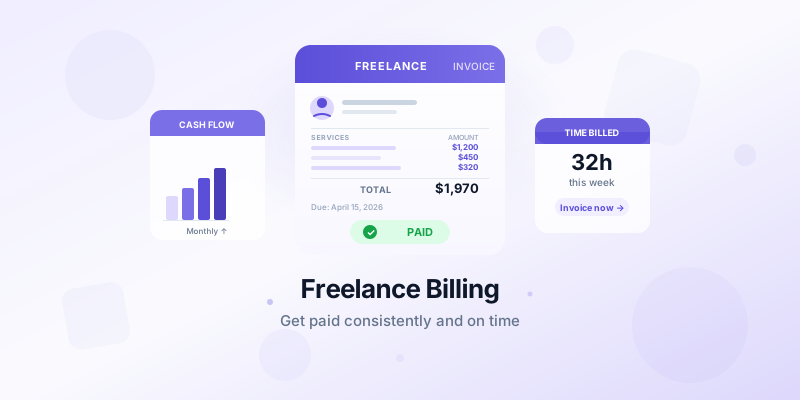
Freelance billing is where most new freelancers lose money — not because they do bad work, but because they bill inconsistently, forget to follow up, or set unclear payment terms. Getting your billing system right takes a few hours of setup and saves you weeks of chasing payments every year.
This guide covers how to choose the right billing model, what to put on every invoice, and how to build a follow-up system that keeps cash flowing without damaging client relationships.
Choose Your Billing Model Before You Start
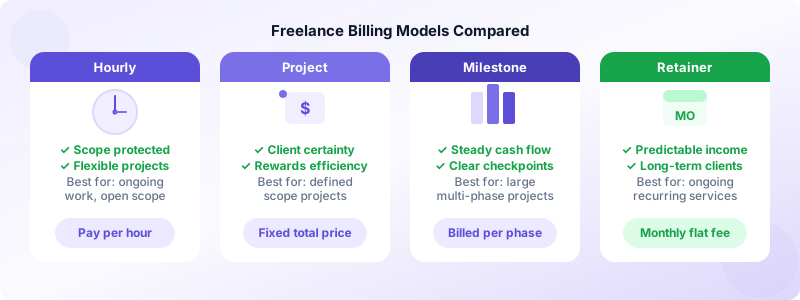
The biggest freelance billing decision is how you charge — not what you charge. Getting this right at the start of every project sets clear expectations and prevents scope disputes.
Hourly billing works best for ongoing relationships or projects where the scope isn't defined yet. You bill for time worked, which protects you from scope creep. The downside: clients sometimes feel anxious about an open-ended cost.
Project-based billing gives clients certainty — they know exactly what the job costs. It protects your profitability if you work efficiently. The risk: every extra hour you spend on a fixed-price project reduces your effective rate. Always define the scope in writing before agreeing to a project price.
Milestone billing splits a large project into phases. You invoice at the end of each phase — "50% due on design approval, 50% due on final delivery." This keeps cash flowing on long projects and gives clients natural checkpoints to review progress.
Retainer billing works for recurring work. You invoice a fixed monthly fee for an agreed scope — for example, 10 hours of support per month. It's the most predictable billing model for both sides.
Whatever model you choose, put it in your contract before work starts. This single step eliminates more billing disputes than anything else.
What Every Freelance Invoice Needs
A professional invoice isn't just a request for payment — it's a document that tells your client exactly what they're paying for and how to pay it. Missing fields slow down payment because someone in accounts payable has to chase you for information.
Every freelance invoice must include:
- Your name or business name, address, and contact email
- Client name and the correct billing contact (not just the project manager)
- Unique invoice number — use a consistent format like INV-2026-001
- Invoice date and payment due date — a specific date, not "due upon receipt"
- Itemized list of services, with hours or units if applicable
- Rate and total for each line item
- Subtotal, any applicable tax, and total amount due
- Payment method and details — your bank info, PayPal, or a payment link
The most common reason invoices get delayed is a missing or incorrect billing contact. Before you send your first invoice to a new client, ask who receives invoices and what information their accounts department requires.
For a complete checklist, see our guide on what to include on an invoice.
When to Send Invoices
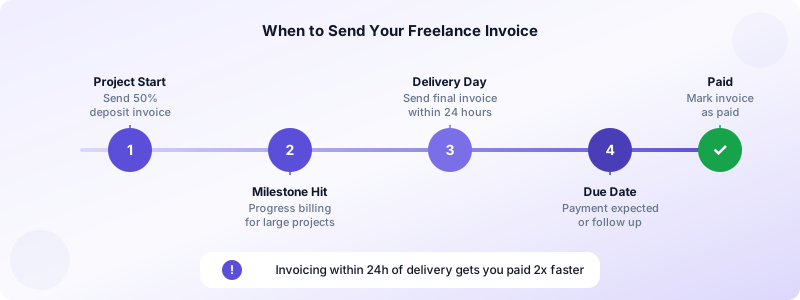
Timing matters more than most freelancers realize. Clients often pay invoices in the order they arrive. Send your invoice within 24 hours of completing a deliverable and you go to the top of the payment queue.
For project-based work: Send the invoice the same day you deliver the final file or completed work. Don't wait until the end of the month.
For hourly work: Set a billing cycle — weekly or biweekly — and stick to it. Sending time-based invoices on the same day every week makes you easier to pay and builds trust with your client's finance team.
For retainers: Send the invoice on the first of the month (or the first business day) before you start the month's work. This is industry standard and reinforces the ongoing nature of the relationship.
One practical rule: never let an invoice age more than 30 days without following up. After that point, payment rates drop significantly.
Set Payment Terms That Protect Your Cash Flow
Most freelancers default to Net 30 because it sounds professional. But Net 30 means waiting a full month for payment — which is a long time when you have your own bills to pay.
Consider these alternatives:
- Net 7 or Net 15 for smaller projects (under $500). Faster payment is reasonable for quick work.
- Net 30 for larger projects or established clients with predictable payment cycles.
- 50% upfront, 50% on delivery for new clients or projects over $1,000. This is industry-standard for many creative fields.
- Due on receipt for repeat clients you trust, especially for small invoices.
Add a late fee clause to every contract — typically 1.5% per month on overdue balances. You don't need to enforce it aggressively, but having it in writing speeds up payment from slow-paying clients.
How to Follow Up Without Damaging the Relationship
Most late payments aren't intentional — they're administrative oversights. A clear, professional follow-up sequence handles the majority of late invoices without friction.
Day 1 after due date: Send a polite reminder. Keep it short: "Hi [Client], this is a quick reminder that invoice INV-2026-047 for $850 was due yesterday. Please let me know if you need anything from my end."
Day 7: Follow up again, slightly more direct. Mention the invoice number, amount, and due date.
Day 14: Escalate to a phone call or flag with the client's billing department directly.
Day 30+: Consider pausing new work until the balance is settled. Put this policy in your contract so it's not a surprise.
Invoices Customers lets you mark invoices as outstanding or overdue and see your full payment status at a glance — so you always know which clients need a nudge.
For detailed email scripts, see our guide on overdue invoice email templates.
Build a Billing System That Runs Itself
Most freelancers who struggle with billing don't have a process problem — they have a consistency problem. Setting up the same routine every billing cycle prevents invoices from falling through the cracks.
A simple weekly billing routine:
- Every Friday, review completed work from the week
- Create and send invoices for any work delivered
- Check the status of outstanding invoices
- Follow up on anything past due
For recurring clients, Invoices Customers stores your client details and line items so you can create a new invoice in under a minute. No retyping the same information every month.
The freelancers who get paid consistently aren't chasing clients — they've built a system where billing is automatic, invoices are clear, and follow-up is routine.
See how to build the full workflow in our guide on how to invoice as a freelancer.
Start Treating Billing Like Part of the Job
Freelance billing isn't a necessary evil — it's a core part of running a sustainable business. Every hour you work deserves to be billed promptly, tracked accurately, and followed up on professionally.
Set up your billing model, build your invoice template, and create a weekly routine. Freelancers who treat billing with the same attention as their client work get paid faster and spend less time chasing money.
Download Invoices Customers and set up your freelance billing system in minutes — no account required, no learning curve.
