
How to Raise Prices With Existing Clients
You have been working with the same client for a year. Your skills have sharpened, your deliverables have improved, and you are producing better results than when you started. But you are still charging the same rate you quoted on day one. Sound familiar?
Raising prices with existing clients is one of the most uncomfortable conversations in business. It feels risky because you do not want to jeopardize a working relationship. But if your rates never increase, your real income shrinks every year due to inflation, rising costs, and the growing value you deliver.
The good news is that raising your prices does not have to mean losing clients. With the right approach and communication, you can increase your rates while strengthening the relationship.
Recognize the Signs That It Is Time to Raise Your Rates
Before you send that rate increase email, you need to confirm that the timing is right. Raising prices without justification damages trust. But ignoring clear signals costs you money.
Here are the signs that a price increase is overdue:
- Your workload has expanded beyond the original scope. If you are doing significantly more than what was agreed, your rate should reflect that. For tips on managing this, see our guide on scope creep prevention for freelancers.
- Your skills and results have improved. You are faster, more accurate, and producing work that delivers measurable results for the client.
- Your rates are below market average. Research what others in your field charge for similar work. If your rate is 20 percent or more below the going rate, it is time to adjust.
- New clients are paying more. If every new client you sign pays a higher rate than your existing ones, there is a clear gap that needs closing.
- It has been 12 months or more since your last increase. Annual rate reviews are standard practice in every industry, including freelancing and small business services.
The key is having at least two or three of these signals before you act. Multiple signals make a clear business case.
Lead With Value, Not Price
The biggest mistake freelancers and business owners make is framing the conversation around the price itself. When you say "I need to charge more," the client hears "this is going to cost me more." When you say "here is how I can deliver even better results," the client hears opportunity.
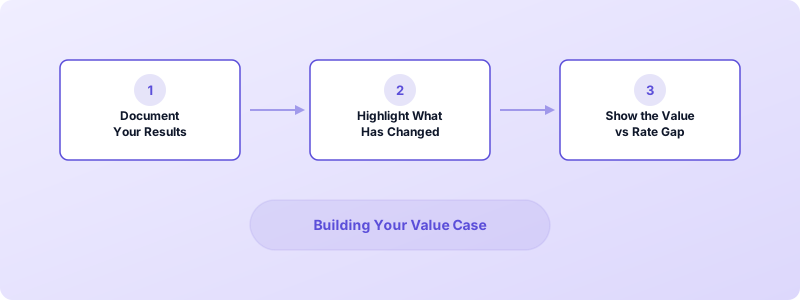
Before you have the rate conversation, build your case:
- Document your results. Pull together concrete examples of what you have delivered. Revenue you helped generate, time you saved, problems you solved, metrics you improved.
- Highlight what has changed. Maybe you have added new skills, taken on more responsibility, or started delivering work that was not part of the original agreement.
- Show the gap between your rate and your value. If you can demonstrate that your work generates ten times what you charge, a 15 percent increase becomes easy to justify.
This approach works because clients do not pay for your time. They pay for outcomes. When you make the conversation about outcomes, the price increase becomes a logical next step rather than an awkward request.
Give Proper Notice and Be Transparent
Surprising a client with a rate increase on the next invoice is the fastest way to damage a relationship. Instead, give them time to adjust their budget and make a decision.
Here is a timeline that works well:
- 30 days minimum notice for small increases of 5 to 10 percent.
- 60 to 90 days notice for increases of 15 percent or more.
- Immediate discussion if the scope has already expanded significantly and you have been absorbing extra work.
When you communicate the increase, be direct and professional. State the new rate, when it takes effect, and briefly explain why. Avoid over-explaining or apologizing. You are running a business, and periodic rate adjustments are normal.
A strong rate increase message includes four elements: acknowledge the relationship, state the new rate and effective date clearly, reference the value you have delivered, and invite questions. Keep it to three to five sentences. Lengthy justifications signal that you are unsure, which makes the client unsure too.
Build Rate Reviews Into Your Contracts
The easiest way to raise prices is to make it expected from the beginning. If your contract includes a rate review clause, the increase conversation becomes a scheduled business event rather than an uncomfortable surprise.
Here are clauses you can add to future contracts:
- Annual rate review. State that rates are reviewed every 12 months and may be adjusted based on scope, market conditions, and the value delivered.
- Cost-of-living adjustment. Include an automatic annual increase of 3 to 5 percent tied to inflation. Most clients accept this as standard business practice.
- Scope-triggered adjustment. Specify that if the project scope expands beyond the original agreement, rates will be renegotiated.
For existing clients who do not have these clauses in their current contracts, you can introduce them at the time of renewal. Frame it as formalizing the relationship and setting clear expectations for both sides.
Good client management means having transparent systems in place so that neither party is caught off guard when business conditions change.
Handle Pushback Without Backing Down
Not every client will accept your rate increase without question. Some will push back, and that is completely normal. How you handle the pushback determines whether you keep the client at a fair rate or cave and continue undercharging.
Here are the most common objections and how to respond:
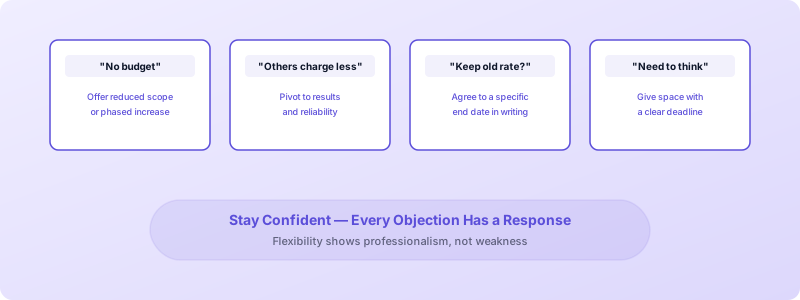
"We do not have the budget for that." Offer options. You can reduce the scope to match their current budget, phase the increase in over two or three months, or adjust the deliverables. What you should not do is keep the same scope at the old price.
"Other freelancers charge less." Acknowledge it and pivot to value. The question is whether those options deliver the same results and reliability you provide.
"Can you keep the old rate for a few more months?" This is often reasonable. Agree to a specific end date for the old rate and confirm the new rate in writing so there is no ambiguity later.
"We will need to think about it." Give them space and a deadline. Something like "I completely understand — take a couple of weeks to review and let me know how you would like to proceed."
If a client ultimately cannot afford your new rate, part on good terms. Ask for a referral or a testimonial. Making room for better-paying work is how you grow.
Update Your Invoices and Keep Clean Records
Once a client agrees to the new rate, update your invoicing immediately. Sending an invoice with the old rate — even accidentally — creates confusion and can restart the negotiation.
Here is a checklist for after the rate increase is confirmed:
- Update your rate in your invoicing system so all future invoices reflect the new pricing.
- Send the first invoice at the new rate promptly to establish the new normal.
- Keep a record of the rate change agreement. Save the email thread or signed amendment where the client accepted the new terms.
- Review your line items. Make sure descriptions match the current scope of work so the invoice clearly communicates what the client is paying for.
With Invoices Customers, you can update your client records and line items in seconds, then generate a clean PDF invoice that reflects your new pricing. A professional invoice that matches the agreed rate reinforces that this is a business transaction, not a favor.
Keeping your records organized also matters for managing your cash flow. When you know what each client pays and when rates were last adjusted, you can plan income projections with confidence.
Make Rate Increases a Regular Business Practice
Raising prices should not be a once-in-a-career event. It should be a regular part of running your business. The most successful freelancers and small business owners review their pricing at least once a year and adjust based on value delivered and market conditions.
Here is a simple annual pricing review process:
- Review each client relationship. What are you delivering? What results have you produced? Has the scope changed?
- Check market rates. Use freelance platforms, industry surveys, and conversations with peers to benchmark your pricing.
- Decide which clients need an adjustment. Not every client needs a rate increase every year. Focus on the ones where the gap between your rate and your value is widest.
- Communicate the change. Use the approach outlined above — lead with value, give proper notice, and be direct.
- Update your invoices. Adjust your records in Invoices Customers so the new rate is reflected on the next billing cycle.
Your prices should grow as your skills, experience, and reputation grow. Start with one client conversation this week and build the habit of regular rate reviews from there.
