
Tutoring Invoice Template for Private Tutors
Invoicing is the part of tutoring that most private tutors handle informally — a text to a parent, a Venmo request without a description, or nothing at all until payment is late. A proper tutoring invoice changes that. It documents the session, confirms the rate, sets the due date, and creates a paper trail you'll want at tax time.
This guide walks through what belongs on a tutoring invoice, how to price your sessions, and how to handle packages, materials, and late payments.
What to Include on a Tutoring Invoice
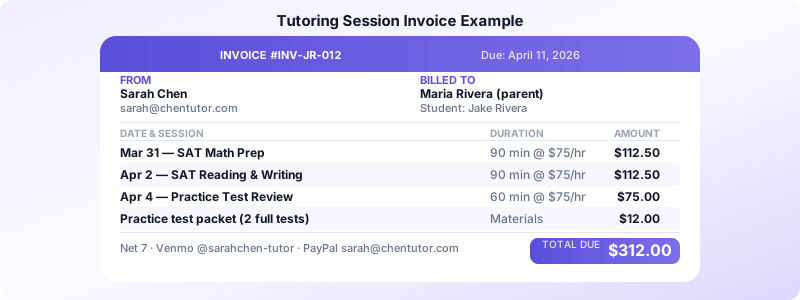
Your name and contact info: Your full name, email, and optionally your phone. If you tutor under a business name ("Summit Tutoring" rather than "Sarah Chen"), use that. A professional header signals that you take your tutoring practice seriously.
Client name and billing contact: For school-age students, the billing contact is typically a parent or guardian — not the student. Include both: "Student: Jake Rivera / Billed to: Maria Rivera." This prevents confusion and ensures the invoice reaches the person who actually pays.
Invoice number: A sequential number (INV-001, INV-002) lets you reference invoices in follow-up emails and track payments easily across multiple students.
Invoice date and due date: Issue date and when payment is expected. Net 7 is standard for tutoring — parents expect short payment windows, and weekly sessions work well with weekly billing.
Session details: For each session, list: date, subject, duration, and rate. "April 2, 2026 — SAT Math Prep, 90 min @ $75/hr = $112.50." The more specific, the better — especially when billing for multiple sessions in one invoice.
Rate and total: Whether you charge hourly or per-session flat rate, make the math visible. Don't just write "3 sessions: $225" — break it down so the client can verify each session.
Payment instructions: Your accepted methods — Venmo, PayPal, Zelle, bank transfer — and any relevant handles or account details.
Typical Tutoring Rates in 2026
Tutoring rates vary by subject, experience, and format. These ranges reflect current US market rates:
By subject:
- General K–8 subjects: $30–$55/hr
- High school math or science: $45–$75/hr
- SAT/ACT test prep: $65–$120/hr
- College-level subjects: $60–$110/hr
- Coding and STEM specialties: $70–$120/hr
By format:
- Online sessions typically run 10–20% lower than in-person
- In-person sessions in high-cost-of-living cities (NYC, SF, Boston) often reach the top of each range
By experience:
- New tutors building a client base: $25–$45/hr
- Established tutors (3+ years): $55–$85/hr
- Specialized tutors (former teachers, Ivy grads, test prep experts): $80–$150/hr
When setting your rate, research what tutors in your subject and area charge. Platforms like Wyzant and Tutor.com show market rates — use them as benchmarks, not ceilings.
Hourly vs. Package Billing
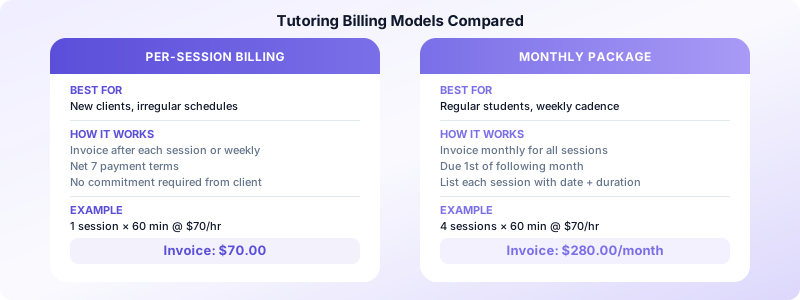
Hourly billing is simplest: charge per session, invoice weekly or after each session. Good for irregular scheduling or trial arrangements with new students.
Package billing works well once you have a steady student. Common packages:
- 4-session monthly package (weekly cadence): predictable for both you and the family
- 10-session block: often sold at a slight discount (5–10%) to lock in commitment
- Intensive prep package: fixed sessions ahead of an exam date (e.g., "8-session SAT sprint")
When invoicing packages, clarify:
- How many sessions are included
- Expiry (sessions unused after 60 days may not carry over)
- Whether missed sessions are forfeited or rescheduled
Invoice the package upfront or at the start of each month. This improves your cash flow and reduces the friction of chasing payment after individual sessions.
Materials and Additional Charges
If you provide printed materials, practice tests, or workbooks, invoice these as a separate line item: "Practice test packet (3 full-length SATs): $15."
Other billable additions:
- Travel time/mileage: If you drive to a student's home, include travel at an agreed rate. "$12 travel fee (15 min drive)" is reasonable for in-home sessions.
- Grading and feedback time: If you grade essays or problem sets outside of session time, you can bill for it: "Essay review and feedback (45 min outside session): 0.75 hr × $60 = $45."
- Curriculum planning: For ongoing students, monthly curriculum planning time (30–60 min) is reasonable to bill.
Always agree on these charges upfront and reference them on your first invoice. Unexpected line items cause disputes.
Cancellation Policy on Your Invoice
Cancellations are the biggest payment headache for private tutors. A clear policy on your invoice prevents the awkward conversation.
Standard approach: 24-hour cancellation notice required. Sessions cancelled with less than 24 hours notice are charged at 50% of the session rate.
Include this as a note on every invoice: "Cancellation policy: 24-hour notice required. Late cancellations charged at 50% of session rate."
The first time a parent cancels last-minute without paying the fee, point to the policy on the invoice. Most will accept it. Having it in writing removes the personal edge from the conversation.
Invoices Customers lets you add recurring notes — including your cancellation policy — to every invoice without retyping it each time. For tips on what to do when clients don't pay, see our guide on how to follow up on unpaid invoices.
How Often to Invoice
The two most common approaches:
Per-session invoicing: Send after each session. Best for new clients, irregular students, or premium-rate tutors. Keeps cash flow tight and payments never pile up.
Monthly invoicing: Send one invoice covering all sessions in the month, due on the 1st or 5th of the following month. Works well for recurring weekly students with reliable families. Reduces admin overhead.
For monthly invoicing, list each session individually with date, duration, and charge. Parents appreciate the detail — it confirms you actually held the sessions you're billing for.
Staying Organized Across Multiple Students
Once you have five or more students, manual tracking becomes a real burden. A few practices that help:
Consistent invoice numbering: Use a format that includes the student reference — "INV-JR-008" for Jake Rivera's 8th invoice — so you can tell at a glance which student an invoice relates to.
Track paid vs. unpaid per student: A simple spreadsheet or invoicing app with a status column (unpaid / paid / overdue) gives you a live view of who owes what.
Follow up on day 8 if unpaid: For Net 7 invoices, a brief message on day 8 — "Just a reminder, invoice for April sessions is due" — catches most late payments before they become a problem.
Don't start new sessions with overdue balances: If a family has an unpaid invoice and wants to book more sessions, address the balance first. This is standard practice and parents who are otherwise good clients understand it.
Download Invoices Customers to manage all your tutoring clients from your phone — create invoices, track payment status, and store client details without a subscription or monthly fee. See our full guide on how to create professional invoices to set up your invoicing workflow from scratch.
