
Construction Estimate Template: A Contractor Guide
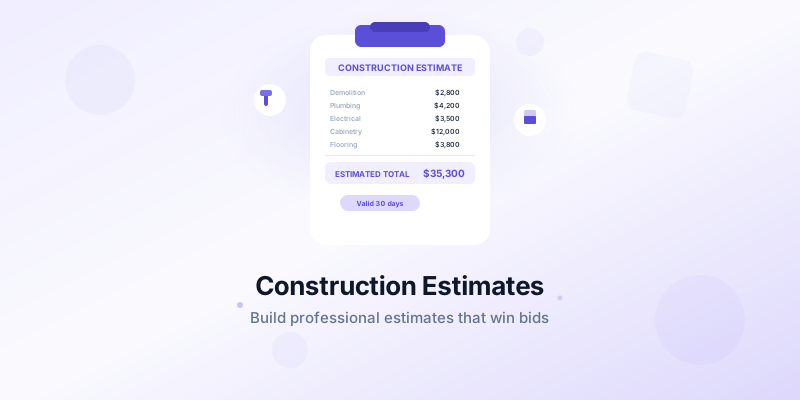
You're competing for a $45,000 kitchen renovation. The homeowner is comparing your bid against two other contractors. Your construction estimate template isn't just a price list — it's your first impression, your sales pitch, and your protection against scope creep, all rolled into one document.
Contractors who use professional, detailed construction estimate templates win more bids and experience fewer payment disputes. A well-structured estimate sets clear expectations from day one and makes the transition from estimate to invoice seamless when the work is done.
Why a Good Estimate Template Wins You More Jobs
Homeowners and general contractors evaluate bids based on clarity and professionalism, not just price. A detailed construction estimate template gives you three advantages over competitors who send vague, handwritten quotes.
Builds trust instantly. A professional estimate with itemized costs, clear timelines, and your company details signals that you run a legitimate operation. Clients are more comfortable hiring contractors who communicate clearly in writing.
Reduces scope disputes. When every task, material, and cost is documented upfront, there's a clear reference point if the client asks for changes. "That wasn't in the original estimate" becomes an easy, factual conversation instead of an argument.
Speeds up the approval process. Detailed estimates answer client questions before they ask them. Instead of multiple rounds of "how much for the tile?" and "does this include demolition?", your estimate covers everything — so the client can approve and you can start faster.
What Every Construction Estimate Must Include
A complete construction estimate covers more ground than a standard service invoice. Here's what belongs in every contractor estimate.
Your business information. Company name, license number, address, phone, and email. In construction, including your license and insurance details builds credibility and is legally required in many states.
Client and project details. The client's name, project address (not always the same as their billing address), and a brief project description. Be specific: "Full kitchen renovation at 123 Oak Street" is better than "kitchen work."
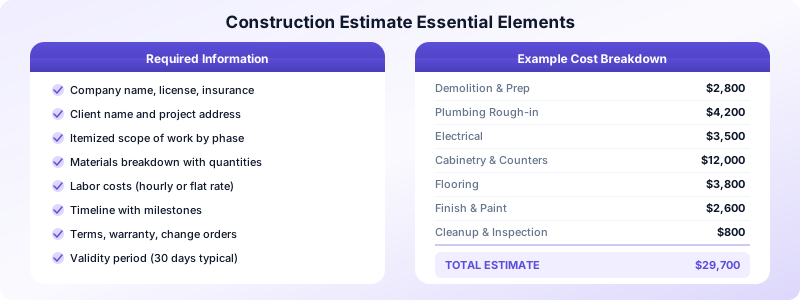
Itemized scope of work. Break the project into phases or trade categories:
- Demolition and site prep — $2,800
- Plumbing rough-in — $4,200
- Electrical — $3,500
- Framing and drywall — $5,400
- Cabinetry and countertops — $12,000
- Flooring — $3,800
- Painting and finish work — $2,600
- Cleanup and final inspection — $800
Each line item should include a description of work, materials, and labor costs where applicable.
Materials breakdown. List major materials separately from labor so the client can see where their money goes. Include quantities, unit prices, and any markup you apply. Transparency in materials pricing reduces pushback on your total.
Labor costs. Show labor as a separate category or built into each line item. If you bill hourly for some work and flat-rate for others, make the method clear for each.
Timeline. Include estimated start and completion dates, plus key milestones. Clients want to know not just how much, but how long.
Terms and conditions. Payment schedule (deposit, milestone payments, final payment), warranty information, change order process, and permit responsibilities. This section protects both you and the client.
Validity period. Material prices fluctuate — especially lumber, steel, and fixtures. State that the estimate is valid for 30 days (or whatever timeframe works for your market). After that, prices may need adjustment.
Payment schedule. Outline when payments are due throughout the project. A common structure for residential construction is: 30% deposit before work begins, 30% at the midpoint milestone, and 40% upon completion and final inspection. This protects both you and the client — you maintain cash flow for materials, and the client doesn't pay in full until the work meets their expectations.
Permits and additional costs. List any permits, inspection fees, dumpster rentals, or other project-related expenses as separate line items. Contractors who bury these costs in labor rates often face pushback when clients discover the hidden charges. Transparency wins trust.
How to Build Your Estimate Step by Step
Follow this process for every job to create accurate, professional construction estimates.
Step 1: Visit the site. Never estimate a construction project from photos or descriptions alone. Walk the property, measure everything, identify potential complications (old wiring, water damage, code issues), and photograph conditions.
Step 2: Calculate material quantities. Use your measurements to determine exactly how much lumber, drywall, tile, pipe, and wire you need. Add 10-15% for waste and unexpected needs. Price each material at current supplier rates.
Step 3: Estimate labor hours. Based on your experience, estimate how many hours each phase will take. Factor in crew size, complexity, and any subcontractor costs. Include a buffer for weather delays or unforeseen issues on exterior work.
Step 4: Add overhead and profit. Your estimate must cover more than materials and labor. Include your overhead (insurance, vehicle, tools, office costs) and a fair profit margin. Most contractors aim for 10-20% profit margin on residential work.
Step 5: Organize and format. Group costs by category, add subtotals, and calculate the grand total. Format everything professionally with your company branding. The difference between an estimate and an invoice matters — your estimate should clearly state that amounts are approximate and subject to change based on actual conditions.
Step 6: Review and send. Double-check all calculations, verify material prices are current, and proofread client details. Send as a PDF with a cover email summarizing the project and your proposed timeline.
Step 7: Follow up within 48 hours. If you haven't heard back within 2 days, call or email the client. Ask if they have questions about any line items. Responsiveness during the bidding phase signals reliability during the build phase. Contractors who follow up on estimates within 48 hours close 30% more jobs than those who wait for the client to reach out.
Common Estimation Mistakes That Cost Contractors Money
These errors eat into your profit margin and strain client relationships.
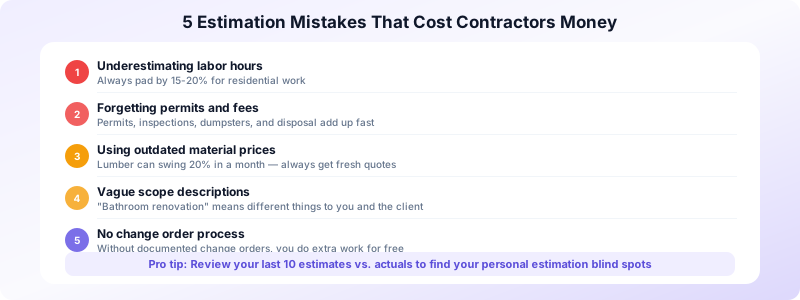
- Underestimating labor. The most expensive mistake. If you quote 40 hours for a bathroom remodel that takes 60, you absorb 20 hours of unpaid labor. Always pad your labor estimates by 15-20% for residential work.
- Forgetting permits and fees. Building permits, inspection fees, dumpster rentals, and disposal costs add up fast. Include them as line items or you'll pay out of pocket.
- Using outdated material prices. Lumber prices can swing 20% in a month. Always get current supplier quotes before submitting an estimate, and include a validity period.
- Vague scope descriptions. "Bathroom renovation" means different things to you and the client. Be specific: "Remove existing tile, install new ceramic tile (12x24 marble-look) on floors and shower walls up to 8 feet."
- No change order process. Without a documented process for handling scope changes, you'll end up doing extra work for free. Include a clause that additional work requires a signed change order with adjusted pricing.
From Estimate to Invoice: Closing the Loop
When the client approves your estimate and the work is complete, converting that estimate into an invoice should be straightforward.
Compare estimated vs. actual costs. Review each line item against what you actually spent on materials and labor. Note any change orders that were approved during the project.
Update amounts to actuals. If your estimate was $35,000 and actual costs came in at $36,200 due to an approved change order, your invoice should reflect the approved scope changes with clear documentation.
Apply your payment terms. If you collected a 30% deposit and a 30% milestone payment, your final invoice is for the remaining 40%.
Reference the original estimate. Include the estimate number on your invoice so the client can cross-reference. This builds trust and makes approval faster.
With Invoices Customers, you can create detailed estimates on your iPhone, send them to clients for approval, and convert them to professional invoices with a single tap when the job is done. All your client details, line items, and pricing carry over automatically.
Download Invoices Customers and create construction estimates that win more bids and convert to invoices in seconds.
