
Small Business Bookkeeping Basics for 2026
Understanding small business bookkeeping basics is one of the smartest moves you can make as an entrepreneur or freelancer. Solid bookkeeping gives you control over your money, keeps tax season stress-free, and helps you make confident business decisions. You do not need an accounting degree to get started. You just need a clear system and the discipline to follow it.
This guide covers everything you need to build a bookkeeping habit that works, from choosing your method to tracking income and expenses to staying organized year-round.
Why Bookkeeping Matters for Small Businesses
Bookkeeping is the foundation of every healthy business. Without it, you are guessing about your financial position instead of knowing it.
When you keep accurate records, you can see exactly how much money flows in and out each month. You spot trends early, like a client who always pays late or a subscription you forgot to cancel. You also avoid nasty surprises when quarterly taxes come due.
Strong bookkeeping protects you during audits, too. The IRS expects clear records of every business transaction. If you cannot produce them, you risk penalties and lost deductions. Keeping your books in order is not optional. It is a basic cost of doing business.
Choose the Right Bookkeeping Method
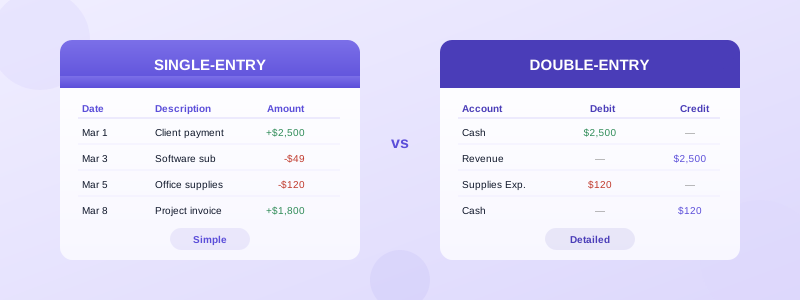
Before you record a single transaction, decide which bookkeeping method fits your business.
Single-entry bookkeeping tracks each transaction once, either as income or an expense. Think of it as a simple checkbook register. This method works well for freelancers and sole proprietors with straightforward finances. It is fast, easy to learn, and requires no special software.
Double-entry bookkeeping records every transaction in two accounts: a debit and a credit. This method provides a more complete picture of your finances and catches errors automatically because the books must balance. If you carry inventory, have business loans, or plan to grow, double-entry is the better choice.
Most small business owners start with single-entry and move to double-entry as their business becomes more complex. Pick the method that matches your current situation and upgrade when you need to.
Set Up Your Chart of Accounts
A chart of accounts is simply a list of categories where you record every financial transaction. Think of it as the filing system for your money.
Every chart of accounts includes five main types:
- Assets — what your business owns (cash, equipment, accounts receivable)
- Liabilities — what your business owes (loans, credit card balances, unpaid bills)
- Equity — your ownership stake in the business
- Revenue — money earned from products or services
- Expenses — costs of running the business (rent, supplies, software, travel)
Start simple. You can always add sub-categories later as your business grows. A freelance writer might need only a handful of expense categories, while a contractor might need dozens. The goal is to make every transaction easy to classify so you actually do it.
Review your chart of accounts every quarter. Remove categories you never use and add new ones when spending patterns change. A clean chart of accounts means cleaner reports and faster decision-making.
Track Income and Expenses Consistently
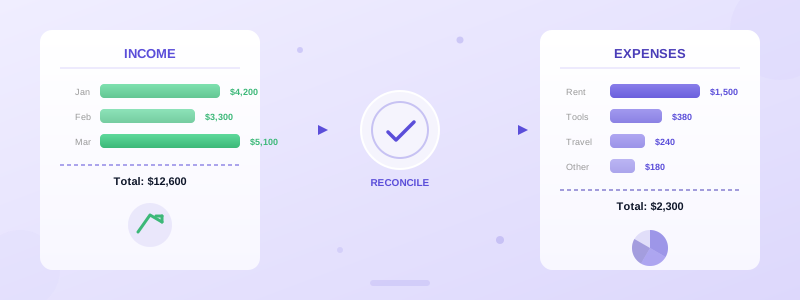
Consistency is the secret weapon of good bookkeeping. Recording transactions once a week takes fifteen minutes. Catching up after three months of neglect takes an entire weekend.
For income tracking, record every payment the moment it hits your account. Note the client name, invoice number, amount, and date received. If you use Invoices Customers to manage your billing, your invoice records already capture most of this information. You can track outstanding, overdue, and paid invoices directly in the app, giving you a clear picture of money owed and money received.
For expense tracking, save every receipt and log each purchase promptly. Separate your business and personal finances by using a dedicated business bank account and credit card. This single step eliminates hours of sorting later. Check out our guide on how to track business expenses for a deeper dive into methods and tools.
Set a recurring calendar reminder for your weekly bookkeeping session. Friday afternoons work well because you can close out the week while transactions are still fresh in your memory.
Understand Cash vs Accrual Accounting
You also need to pick an accounting method for reporting purposes. The two main options are cash basis and accrual basis.
Cash basis accounting records income when you receive payment and expenses when you pay them. Most freelancers and small businesses use this method because it is simple and reflects the actual cash in your bank account.
Accrual basis accounting records income when you earn it (when you send the invoice) and expenses when you incur them (when you receive the bill), regardless of when money changes hands. This method gives a more accurate picture of profitability but is more complex to manage.
If your annual revenue is under $25 million, the IRS lets you choose either method. For most small business owners, cash basis is the logical starting point. Just make sure you stay consistent once you choose. Switching methods mid-year creates confusion and potential tax issues.
Understanding the difference helps you read your own financial reports accurately. When you use cash basis and a client owes you $5,000 from last month, that amount does not appear in your income until the check clears. With accrual, it shows up the day you create your invoice.
Reconcile Your Books Monthly
Reconciliation means comparing your bookkeeping records against your bank and credit card statements to make sure everything matches. It is the single most effective way to catch errors, duplicate entries, and fraudulent charges.
At the end of each month, follow these steps:
- Download your bank statement and credit card statement
- Compare each transaction on the statement to your records
- Mark off every transaction that matches
- Investigate any discrepancies immediately
- Adjust your records to fix errors
If your books balance perfectly, you are done in minutes. If they do not, the discrepancy tells you exactly where to look. Common culprits include forgotten subscriptions, bank fees you did not record, and deposits that have not cleared yet.
Monthly reconciliation also forces you to stay current. You cannot reconcile if you have not recorded your transactions, so it serves as a natural accountability checkpoint.
Build Bookkeeping Habits That Last
The biggest bookkeeping challenge is not complexity. It is consistency. Here are practical habits that keep your books accurate without consuming your week.
Automate what you can. Connect your bank account to your accounting software so transactions import automatically. Use Invoices Customers to generate professional invoices and track payment status, so your income records stay current with zero extra effort.
Batch your work. Instead of recording expenses one at a time throughout the day, photograph receipts immediately and batch-enter them during your weekly bookkeeping session.
Keep tax deadlines visible. Mark estimated tax payment dates on your calendar. When you maintain clean books, calculating your quarterly payment takes minutes instead of hours. Pair your bookkeeping records with a solid understanding of self-employed tax deductions to keep your tax bill as low as legally possible.
Back up your data. Store digital copies of all receipts and financial records. If you use an app that keeps data locally on your device, make sure your phone is backed up regularly.
Small business bookkeeping basics are not complicated once you build the right habits. Start with a simple system, stay consistent, and your finances will always be under control. Download Invoices Customers to handle the invoicing side of your books and keep every client payment organized from day one.
