
Credit Note vs Refund Invoice: Key Differences
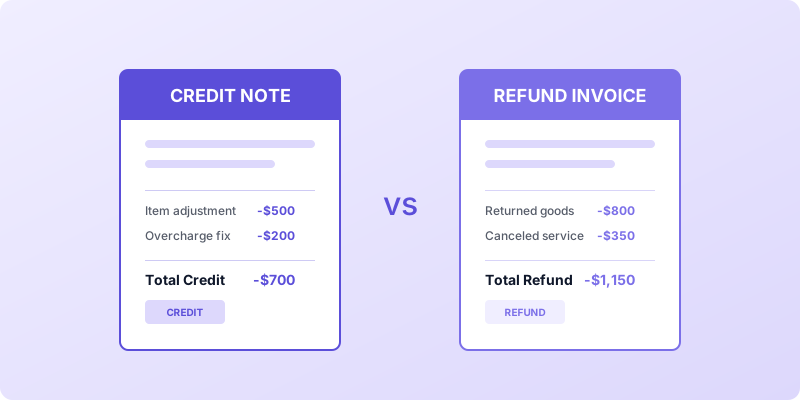
A client overpaid you by $500, and now you need to make it right. Do you issue a credit note or a refund invoice? Choosing the wrong document creates accounting headaches, confuses your client, and can cause problems at tax time. Understanding the credit note vs refund invoice difference ensures you handle corrections professionally and keep your financial records clean.
This guide explains exactly what each document does, when to use it, and how to manage both without breaking your bookkeeping.
What Is a Credit Note?
A credit note is a document that reduces the amount a client owes you. You issue it when the original invoice needs an adjustment — maybe you overcharged, applied the wrong discount, or the client returned part of an order. The credit note references the original invoice and formally records the reduction.
Here is the key point: a credit note does not mean money leaves your bank account. It adjusts the balance on paper. The client can apply that credit toward a future invoice, use it to reduce their current outstanding balance, or request a cash refund separately.
For example, you invoice a client $3,000 for a web design project. After delivery, you realize you accidentally charged for an extra revision round that was included in the original scope. You issue a credit note for $400 referencing the original invoice. The client's balance drops to $2,600, and your accounting records reflect the adjustment with a clear paper trail.
Credit notes are sometimes called credit memos. Regardless of the name, they serve the same purpose — documenting that the client's balance has been reduced and why.
What Is a Refund Invoice?
A refund invoice documents the actual return of money to a client. Unlike a credit note, which adjusts a balance, a refund invoice accompanies a direct cash transaction where funds go back to the buyer.
You typically issue a refund invoice when a client returns goods, cancels a service entirely, or when a project is terminated and a partial refund is warranted. The refund invoice shows the original charge, the amount being refunded, and the reason.
For example, a contractor collects a $5,000 deposit for a kitchen renovation. The homeowner cancels the project before work begins. The contractor issues a refund invoice for $5,000 and returns the deposit via bank transfer. The refund invoice serves as the accounting record for that transaction.
In many accounting systems, a refund invoice works together with a credit note. You issue the credit note first to formally document the reduction, then process the refund as a separate payment transaction. This two-step approach keeps your audit trail clear and satisfies tax authorities.
Credit Note vs Refund Invoice: Side-by-Side Comparison
While credit notes and refund invoices both deal with reducing what a client owes, they work differently in practice. Here is a clear breakdown of how they compare.
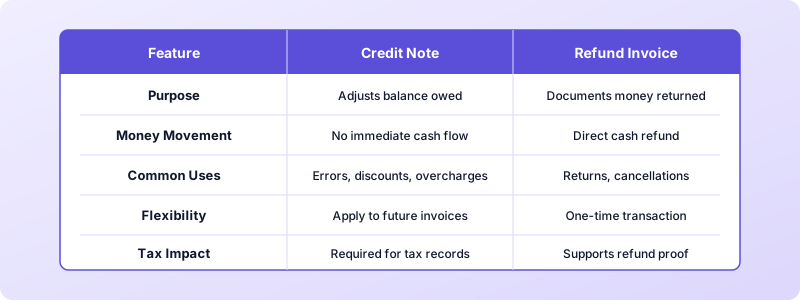
Purpose. A credit note adjusts the client's account balance. A refund invoice documents actual money being returned. One is a bookkeeping adjustment; the other involves cash movement.
Money movement. When you issue a credit note, no money changes hands immediately. The credit sits on the client's account until it is applied or refunded. A refund invoice, on the other hand, accompanies a direct payment back to the client.
Flexibility. Credit notes give you options. The client can apply the credit to their next invoice, hold it as account credit, or request a cash refund later. A refund invoice is a one-time transaction — the money goes back and the matter is closed.
Common triggers. Credit notes are typically issued for pricing errors, overcharges, early payment discounts, or partial order adjustments. Refund invoices are issued for returned products, canceled services, or terminated contracts where money has already been collected.
Tax implications. Both documents affect your tax records. A credit note reduces the taxable amount on the original invoice, which means you may owe less sales tax or VAT on that transaction. A refund invoice serves as proof that money was returned, which supports your tax filing if audited. Many tax authorities require a credit note before they accept an adjustment to a previously reported invoice.
Accounting impact. A credit note reduces your accounts receivable (money clients owe you) and decreases reported revenue. A refund invoice records an outgoing payment and also reduces revenue. Both need to reference the original invoice number so your books stay traceable.
When to Issue a Credit Note vs a Refund Invoice
Knowing which document to send depends on the situation and whether money needs to move.
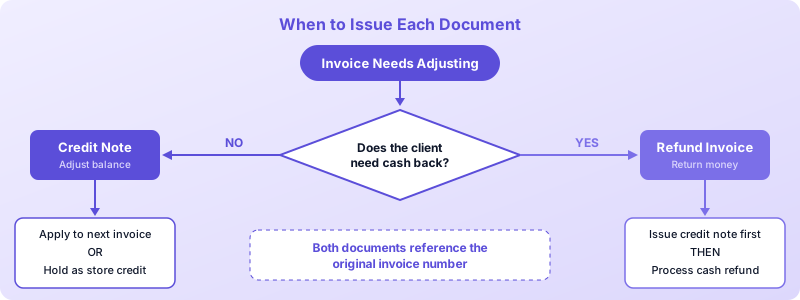
Issue a credit note when:
- You overcharged the client and the invoice has not been paid yet — reduce the balance with a credit note
- The client returns part of an order but plans to place another order soon — apply the credit to their next invoice
- You offered a retroactive discount or promotional pricing that was not reflected on the original invoice
- A billing error needs correction, such as the wrong quantity, wrong rate, or duplicate line item
- The client overpaid and you want to hold the excess as account credit for future work
Issue a refund invoice when:
- The client returns all goods and wants their money back
- A service was canceled entirely and a deposit or prepayment needs to be returned
- A project ends early and the client is entitled to a partial refund for undelivered work
- The client has already paid the original invoice in full and does not want account credit — they want cash back
Use both together when: the client has already paid and you need to return money. Issue the credit note first to formally adjust the invoice, then process the refund and document it with a refund invoice. This two-document approach is considered best practice because it creates a clear audit trail that links the original invoice, the adjustment, and the refund payment.
One of the biggest invoicing mistakes business owners make is editing or deleting the original invoice instead of issuing a credit note. Once an invoice has been sent or recorded in your accounting system, it should never be altered. Credit notes exist specifically to handle corrections without breaking your invoice trail.
How to Create and Manage Credit Notes
Creating a credit note follows the same principles as creating any professional invoice document. Include these elements to keep your records clean and your clients informed.
Reference the original invoice. Every credit note must include the original invoice number it relates to. This is non-negotiable for accounting and tax purposes. Without this reference, your credit note is just a random number floating in your books.
State the reason clearly. Write a brief explanation of why the credit is being issued — returned items, pricing correction, discount applied, or overcharge adjustment. This protects you if a client or tax authority questions the adjustment months later.
Include the correct amounts. List the specific line items being credited, including any applicable tax adjustments. If the original invoice included sales tax or VAT, the credit note should show the tax reduction as well. Make sure you understand the elements every invoice needs so your credit notes mirror that level of detail.
Use sequential numbering. Credit notes should have their own numbering system (such as CN-001, CN-002) that is separate from your invoice numbers but follows the same sequential logic. This makes them easy to find and impossible to confuse with regular invoices.
Send it promptly. Issue credit notes as soon as the adjustment is confirmed. Delays create confusion and make monthly reconciliation harder for both you and your client.
Keep a record of every credit note. Store credit notes alongside the original invoices they reference. When tax season arrives, you need both documents to justify any revenue reductions on your tax filings.
Invoices Customers helps you stay on top of your invoicing workflow by keeping all your client information, invoices, and document history organized in one place on your iPhone. When you need to reference an original invoice to issue a correction, everything is at your fingertips — no digging through email threads or filing cabinets.
Keep Your Invoice Corrections Clean and Professional
The credit note vs refund invoice distinction matters more than most business owners realize. Credit notes adjust balances and give you flexibility. Refund invoices document actual money returned. Using the right one at the right time keeps your accounting accurate, satisfies tax authorities, and shows clients that you handle corrections professionally.
Build a habit of never editing original invoices. Instead, issue credit notes for adjustments and refund invoices when money needs to move. Reference the original invoice number on every correction document, and store everything together for easy retrieval.
Ready to keep your invoicing organized? Download Invoices Customers from the App Store and manage your invoices, clients, and documents in one simple app — no sign-up required.
